
Custom leather manufacturing is the process of transforming a design concept into a finished leather product through professional material selection, product development, production, and quality control. For brands, retailers, and businesses looking to create unique leather goods, working with an experienced custom leather manufacturer is the key to achieving consistent quality, flexible customization, and reliable production.
From leather selection and prototype development to cutting, stitching, inspection, and final delivery, every stage plays an important role in creating premium leather products.
Understanding how custom leather manufacturing works can help businesses choose the right manufacturing partner and build successful leather product lines.
1. What Is Custom Leather Manufacturing?
Custom leather manufacturing refers to the process of producing leather products based on a customer’s specific requirements, including product design, materials, colors, logos, packaging, and production standards.
Unlike ready-made leather products, custom manufacturing allows brands to create products that match their market positioning and customer preferences.
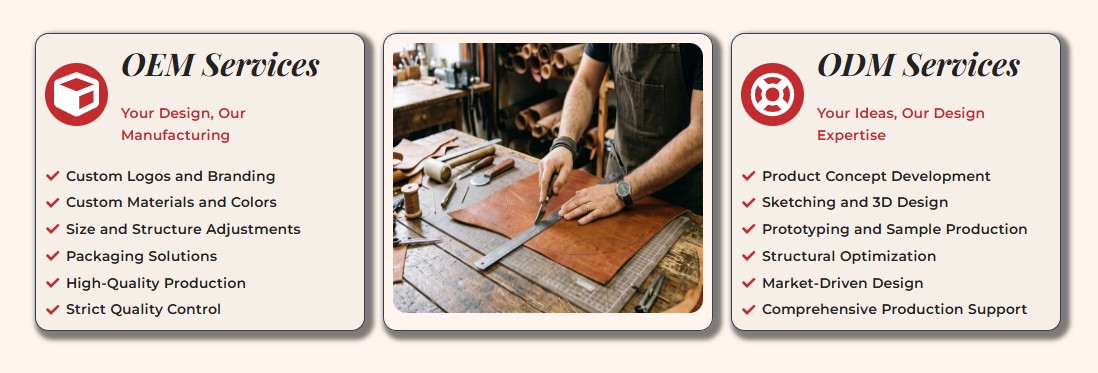
A professional leather manufacturer can provide complete OEM and ODM services, including:
- Custom product design
- Material sourcing
- Prototype development
- Logo and branding customization
- Mass production
- Quality inspection
- Packaging and delivery
This manufacturing model is widely used by fashion brands, luxury companies, promotional product suppliers, and retailers around the world.
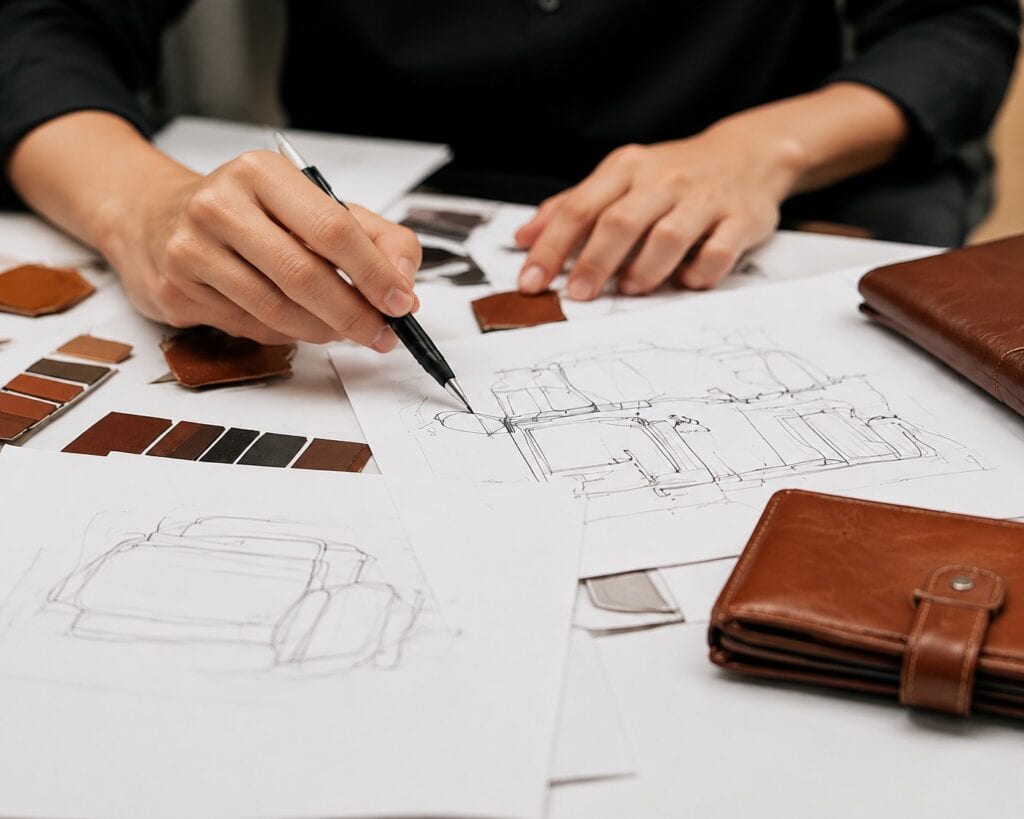
2. Step 1: Design Development and Product Consultation
The first stage of custom leather manufacturing begins with understanding the customer’s product requirements.
During the consultation stage, manufacturers usually discuss:
Product Concept and Design Requirements
Customers provide their ideas, sketches, reference images, or existing samples. The manufacturer analyzes the design structure, functionality, and production feasibility.
For example, a brand may request:
- Custom leather wallets
- Leather handbags
- Watch straps
- Passport holders
- Leather accessories
- Corporate gift products
The manufacturer will evaluate the design details, including dimensions, construction methods, and suitable materials.
Technical Design and Sample Preparation
After confirming the product concept, the manufacturing team creates technical drawings and develops the first prototype.
The sample allows customers to check:
- Product appearance
- Leather texture
- Stitching details
- Hardware accessories
- Logo placement
- Overall quality
Prototype development is an important step because it helps identify potential issues before mass production begins.
3. Step 2: Leather Material Selection
Leather selection directly affects the appearance, durability, and price of the final product.
A professional custom leather manufacturer provides different material options based on customer requirements and budget.
Common leather materials include:
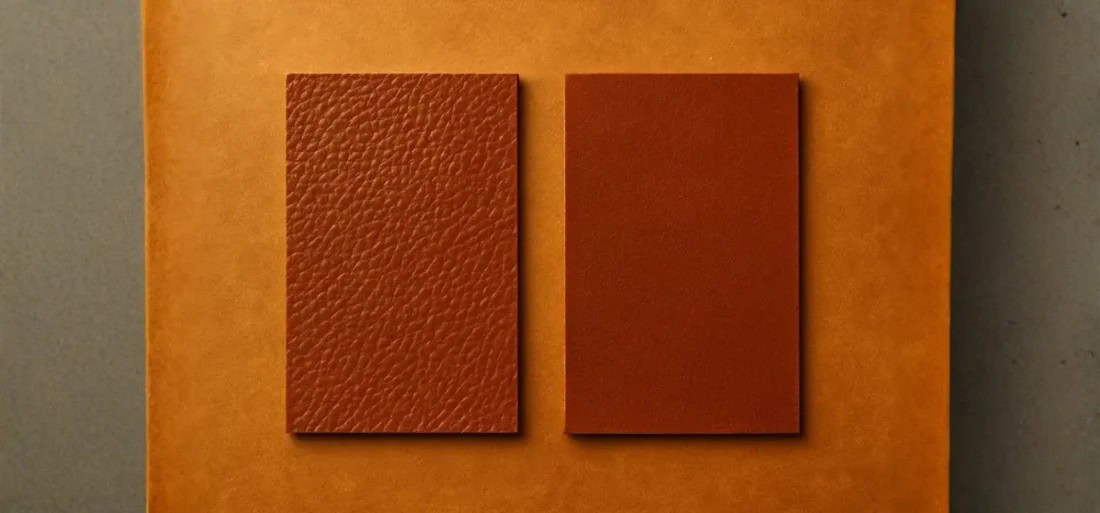
Genuine Leather
Genuine leather is widely used for premium products because of its natural texture, durability, and elegant appearance.
Popular options include:
- Full grain leather
- Top grain leather
- Cowhide leather
- Sheepskin leather
PU Leather and Synthetic Materials
PU leather is a cost-effective alternative that offers:
- Wide color options
- Easy maintenance
- Consistent appearance
- Competitive pricing
It is commonly used for fashion accessories and large-volume production.
Specialty Leather Materials
For luxury and unique product lines, manufacturers may offer:
- Crocodile pattern leather
- Embossed leather
- Vintage leather
- Suede leather
- Metallic leather
Choosing the right leather material helps brands create products that match their target customers.
4. Step 3: Pattern Making and Cutting Process
Once the material and design are confirmed, production enters the manufacturing stage.
The first step is creating accurate cutting patterns based on the product design.
Precision Leather Cutting
Leather pieces are carefully cut according to the product structure.
Professional factories use different cutting methods, including:
- Manual cutting
- Die cutting
- CNC cutting technology
Precision cutting ensures that every component fits perfectly during assembly.
Leather Preparation
Before sewing, leather pieces usually go through preparation processes such as:
- Edge painting
- Skiving
- Surface treatment
- Reinforcement processing
These steps improve the appearance and durability of the finished product.
5. Step 4: Assembly and Craftsmanship Production
Assembly is one of the most important stages in leather product manufacturing.
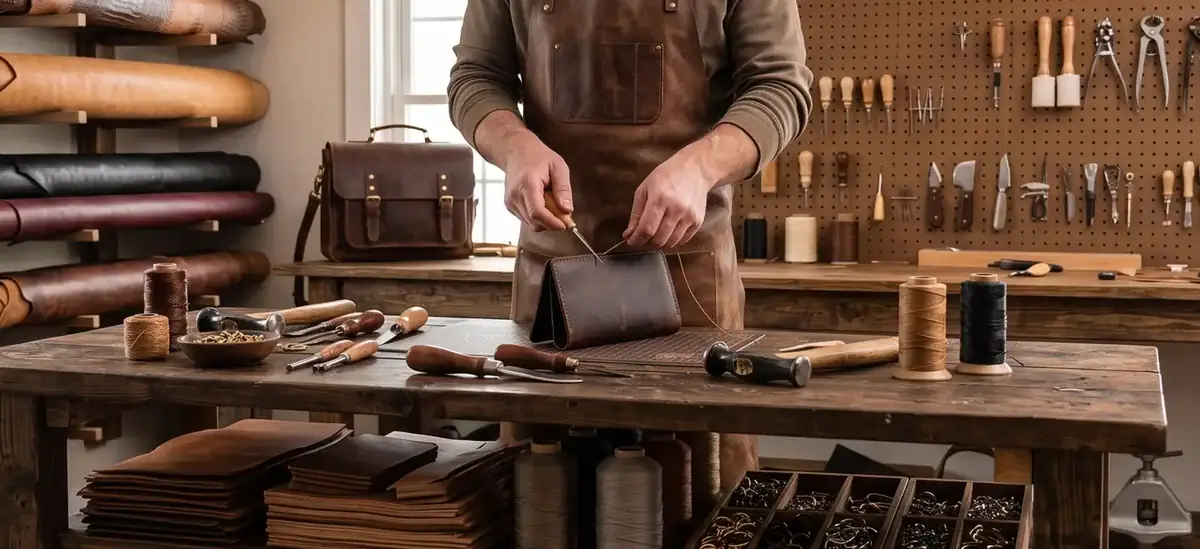
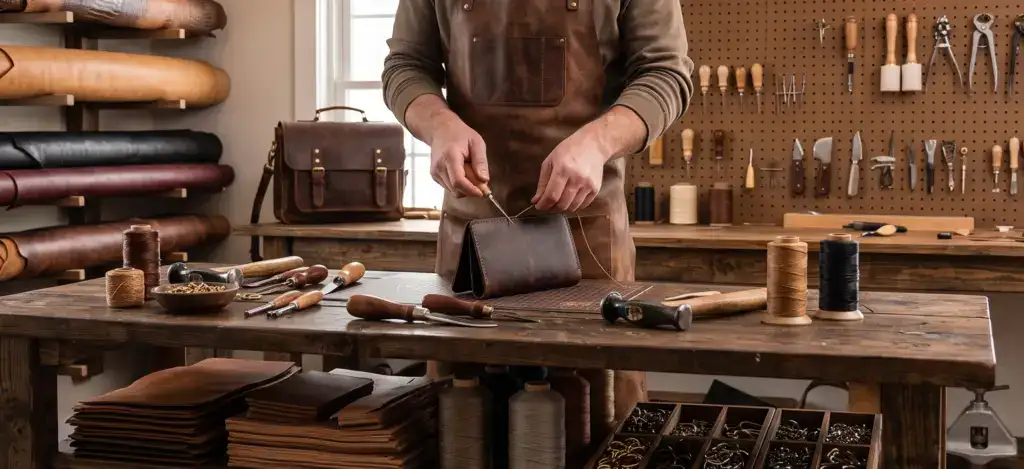
Skilled craftsmen combine individual leather components into a complete product.
The production process may include:
Stitching and Construction
High-quality stitching ensures product strength and visual appeal.
Manufacturers carefully control:
- Stitch spacing
- Thread quality
- Sewing accuracy
- Structural stability
Hardware and Accessories Installation
Many leather products include additional components such as:
- Metal zippers
- Buckles
- Magnetic buttons
- Decorative accessories
These details enhance both functionality and product appearance.
Logo and Branding Customization
For private label projects, manufacturers can add brand elements through different techniques:
- Embossed logos
- Printed logos
- Metal logo plates
- Laser engraving
This allows businesses to create unique branded leather collections.
6. Step 5: Quality Control and Inspection
Quality control is essential in custom leather manufacturing.
Before products are shipped, manufacturers perform detailed inspections to ensure they meet customer requirements.
Quality checks usually include:
Material Inspection
The factory checks:
- Leather consistency
- Color accuracy
- Surface condition
- Material defects
Production Inspection
Finished products are inspected for:
- Stitching quality
- Product structure
- Hardware function
- Size accuracy
- Overall appearance
A professional manufacturer ensures every product maintains consistent quality throughout production.
7. Step 6: Packaging and Global Delivery
After passing quality inspection, products move to the final packaging stage.
Manufacturers can provide customized packaging solutions, including:
- Branded boxes
- Dust bags
- Product labels
- Custom packaging designs
For international customers, experienced leather manufacturers also handle export preparation and global shipping coordination.
This helps brands receive products safely and efficiently.
8. Benefits of Working With a Custom Leather Manufacturer
Partnering with a professional manufacturer provides many advantages for businesses.
Create Unique Products
Custom manufacturing allows brands to develop exclusive designs instead of competing with standard products.
Flexible OEM and ODM Solutions
Manufacturers can support different business models, whether customers have complete designs or need assistance developing new products.
Better Production Control
Working directly with a factory provides better control over:
- Product quality
- Production timeline
- Material selection
- Manufacturing costs
Build a Strong Brand Identity
Customized leather products help businesses create stronger brand recognition and customer loyalty.
9. How to Choose the Right Custom Leather Manufacturer?
Selecting the right manufacturing partner is an important decision for long-term business success.
Before choosing a supplier, consider:
Manufacturing Experience
Look for manufacturers with experience producing similar leather products and serving international markets.
Production Capability
A reliable factory should have:
- Professional production equipment
- Skilled workers
- Quality control systems
- Stable supply chains
Customization Ability
The manufacturer should be able to support:
- Small batch orders
- Large-scale production
- Custom materials
- Private label projects
Communication and Service
Clear communication helps avoid misunderstandings during product development and production.
Conclusion
Custom leather manufacturing is a detailed process that combines design, craftsmanship, technology, and quality management.
From the initial concept and material selection to production and final delivery, every step contributes to creating high-quality leather products.
For brands looking to develop unique leather collections, working with an experienced custom leather manufacturer provides the flexibility, expertise, and production support needed to bring ideas into reality.
Whether you need OEM leather production, ODM solutions, or private label leather products, choosing the right manufacturing partner is the foundation for building successful leather products in the global market.